
Built Exclusively for Next-Generation Connected Vehicles: Winbond Electronics’ W77T Secure Flash Meets Automotive Safety Requirements


Secure flash memory plays a pivotal role in protecting critical automotive data, maintaining firmware integrity, and ensuring regional regulatory compliance. Winbond’s TrustME® W77T secure flash memory is engineered precisely to address these needs, boasting strict regulatory adherence, robust data protection mechanisms, and high-efficiency in-vehicle integration capabilities.
With the evolving architecture of software-defined vehicles, the design methodologies of automotive systems have to be upgraded to align with newly implemented cybersecurity regulations and standards. The European Union’s recently issued Radio Equipment Directive (RED) and EN 18031 standard mandate that manufacturers enhance security mechanisms within their platforms.
Secure flash memory is key to safeguarding critical data, preserving firmware integrity and meeting regional compliance requirements. Winbond’s TrustME® W77T secure flash memory is tailored to these demands, featuring strict regulatory compliance, reliable data protection schemes and seamless in-vehicle integration attributes.
Embedding Cybersecurity and Regulatory Compliance from the Design Stage
The W77T secure flash memory integrates a suite of security mechanisms, designed to help engineers meet stringent regulatory requirements and defend against existing and emerging cybersecurity threats:
- Secure Boot MechanismsThrough cryptographic signature verification during startup, the W77T ensures that only authenticated firmware can be executed. The device’s root of trust keys are stored in a secure, immutable area. It supports One-Time Programmable (OTP) key storage and hardware-level boot code verification, preventing the execution of unauthorized or tampered programs.
- Post-Quantum Cryptography (PQC)The W77T incorporates hardware-accelerated LMS algorithms, compliant with the draft post-quantum digital signature standard developed by NIST. LMS is a hash-based signature technology with forward secrecy, capable of effectively mitigating cryptographic attack risks posed by quantum computing. This algorithm is particularly suited for resource-constrained embedded environments such as ECUs, enabling long-term reliable data protection and verification without compromising performance.
- NIST 800-193 Firmware ResilienceThe device supports firmware anti-rollback mechanisms, secure recovery functions and protected firmware update paths. These safeguards prevent code corruption and unauthorized modifications, enabling the system to detect and respond to abnormal firmware states.
- LMS-OTS Remote Attestation (NIST 800-208)By combining LMS and One-Time Signature (OTS) technologies, the W77T enables remote verification of firmware during manufacturing and deployment. This mechanism cryptographically validates whether the firmware installed on the device matches the trusted image, ensuring end-to-end firmware integrity across the entire supply chain.
These features together form a comprehensive cybersecurity protection architecture, covering secure boot, trusted firmware updates and firmware verification throughout the vehicle’s lifecycle. Even amid increasingly stringent cybersecurity regulations, the system can maintain a stable and trusted security status.
W77T Secure Flash Memory Technical Overview
Winbond Electronics’ W77T secure flash memory delivers high reliability, security and superior performance. It is specifically designed for automotive-grade applications, integrating advanced memory architecture with functional safety and cybersecurity compliance requirements.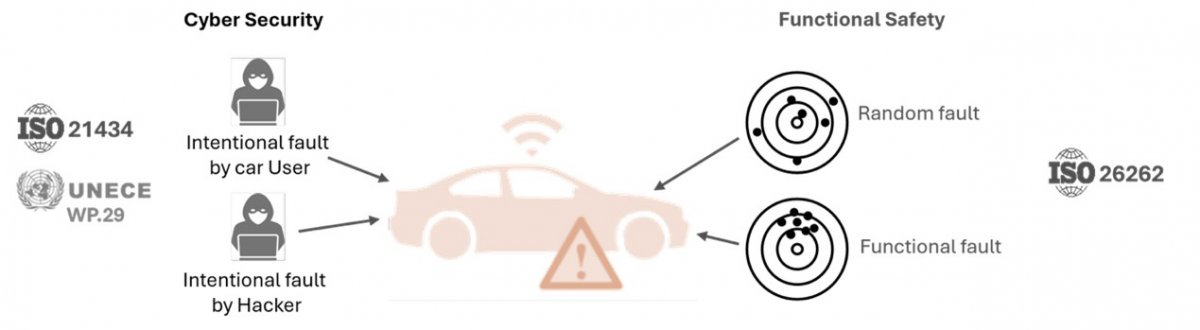
High-Speed Interface Support
The W77T supports Octal/xSPI interfaces. Operating at a frequency of 200 MHz in Double Data Rate (DTR) mode, it achieves a read bandwidth of up to 400 MB/s. This feature is ideal for latency-sensitive applications such as Advanced Driver Assistance Systems (ADAS), in-vehicle infotainment systems, and fast Over-the-Air (OTA) firmware updates. In addition, it is compatible with Quad SPI mode, providing integration flexibility for cross-architecture designs.
Scalable Capacity Configurations
It offers a capacity range from 64Mb to 1Gb, supporting diverse applications—from program storage in basic Electronic Control Units (ECUs) to data logging and execution memory in advanced automotive domain controllers. The versatile capacity options allow design engineers to flexibly configure suitable memory solutions based on cost, performance, and power consumption requirements.
Versatile Package Options
The W77T is available in package types including TFBGA (for Octal SPI), SOIC, and WSON (for Quad SPI). These packages are optimized for automotive-grade solder joint reliability, package space constraints, and thermal performance. All package variants are AEC-Q100 qualified, delivering excellent thermal cycle endurance.
Data Reliability and Integrity
It incorporates a Built-in Error Correction Code (ECC) function, which can correct single-bit errors and detect double-bit errors during read and write operations. The device also integrates a Replay Protected Monotonic Counter (RPMC), providing tamper-resistant timestamps and anti-rollback protection for secure boot and firmware update processes.
Functional Safety and Cybersecurity Compliance
The W77T is developed in accordance with ISO 26262 ASIL-D requirements, supporting functional safety mechanisms such as diagnostic coverage and systematic fault avoidance. Meanwhile, it complies with the ISO/SAE 21434 standard, integrating systematic cybersecurity protection into the development process to defend against common attack vectors such as firmware tampering, key leakage, and fault injection.
Key Automotive Application Scenarios
The W77T is specifically designed to support high-speed, secure data storage across various critical automotive subsystems. Advanced Driver Assistance Systems (ADAS) require fast, low-latency access to sensor fusion data and AI inference results to support real-time decision-making under strict time constraints. Leveraging its high-speed read bandwidth, the device enables Fast Boot and supports real-time OTA firmware updates for in-vehicle infotainment systems and connectivity modules.
In Electric Vehicle (EV) and Battery Management Systems, the W77T can prevent tampering with calibration data, firmware, and operation logs through its integrated RPMC and ECC technologies, ensuring critical data integrity.
For software-defined vehicles, the integrated Post-Quantum Cryptography (PQC) and remote attestation mechanisms enable secure, flexible software deployment across multiple automotive domains, effectively maintaining firmware authenticity and trust chains.
Protecting Supply Chain and Firmware Integrity
As supply chain security gains increasing attention, Winbond has integrated remote attestation functionality into the W77T secure flash memory. This feature ensures that only authenticated firmware can be installed, effectively preventing tampering during manufacturing and distribution processes.
It also helps block counterfeit components and unauthorized data modifications, delivering end-to-end security assurance.
Compliance with Global Automotive Cybersecurity Standards
In addition to complying with EU regulations such as the Radio Equipment Directive (RED) and EN 18031, the W77T secure flash memory is designed to meet a broad range of international cybersecurity and functional safety standards, ensuring its applicability to global automotive platforms.
The device supports Common Criteria (CC) Evaluation Assurance Level (EAL) ratings, verifying its resistance to software and physical attacks in secure embedded environments. It also complies with the U.S. government’s FIPS 140-3 cryptographic module security standard, demonstrating robust capabilities in key storage, secure key generation, and tamper detection. Furthermore, the W77T secure flash memory is SESIP certified, validating the integrity of its secure hardware implementation and lifecycle management mechanisms.
This combination of certifications allows automotive manufacturers to securely integrate the W77T into platforms targeting multiple regional markets, ensuring consistent security levels, regulatory compliance, and accelerated cross-regional certification processes.
Balancing Security and Market Scalability
High-assurance security features—such as Post-Quantum Cryptography (PQC), remote attestation, and secure boot—typically come with increased system complexity, larger chip area, and additional design overhead. However, the W77T secure flash memory’s architecture delivers robust, standards-compliant security in a compact, cost-effective package, making it suitable for both high-end and high-volume automotive platforms.
The W77T integrates lightweight yet high-strength PQC algorithms (including the NIST-recognized LMS), optimized for resource-constrained application platforms. These algorithms are implemented in hardware to reduce computational overhead and encryption latency. Additionally, the W77T supports hardware-accelerated SHA and True Random Number Generator (TRNG) functions, enabling secure operations to run independently of the main processor, thereby freeing up system resources and simplifying integration workflows.
Combining diverse capacity configurations (64Mb to 1Gb) with multiple package types optimized for automotive applications, the W77T secure flash memory enables OEMs and Tier 1 suppliers to deploy a single secure flash platform across a wide range of ECU applications, without compromising performance, regulatory compliance, or cost targets.
Scalable Architecture for Future Vehicles
As the industry evolves from Level 2 to Level 5 autonomous driving, the demand for secure, high-capacity memory will continue to rise. Winbond is continuously developing technologies to meet these future needs, including:
- Higher-capacity secure flash memory: Designed to handle the massive volumes of critical data generated by autonomous driving platforms.
- Enhanced functional safety mechanisms: Built on the ISO 26262 ASIL-D foundation to support increasingly complex automotive systems.
- Quantum-resistant cybersecurity protection: Future-proof cryptographic technologies designed to address long-term cyber threats.
Conclusion
Winbond’s W77T secure flash memory provides design engineers with a secure, high-speed solution tailored for next-generation connected vehicles. It combines firmware protection, post-quantum cryptography, and remote attestation capabilities to fully support system cybersecurity and global compliance requirements.
With its high scalability, industry certifications, and cost-effective design, the W77T secure flash memory is more than just a memory product—it is a key enabler for manufacturers to build safer, more reliable future vehicle systems.